
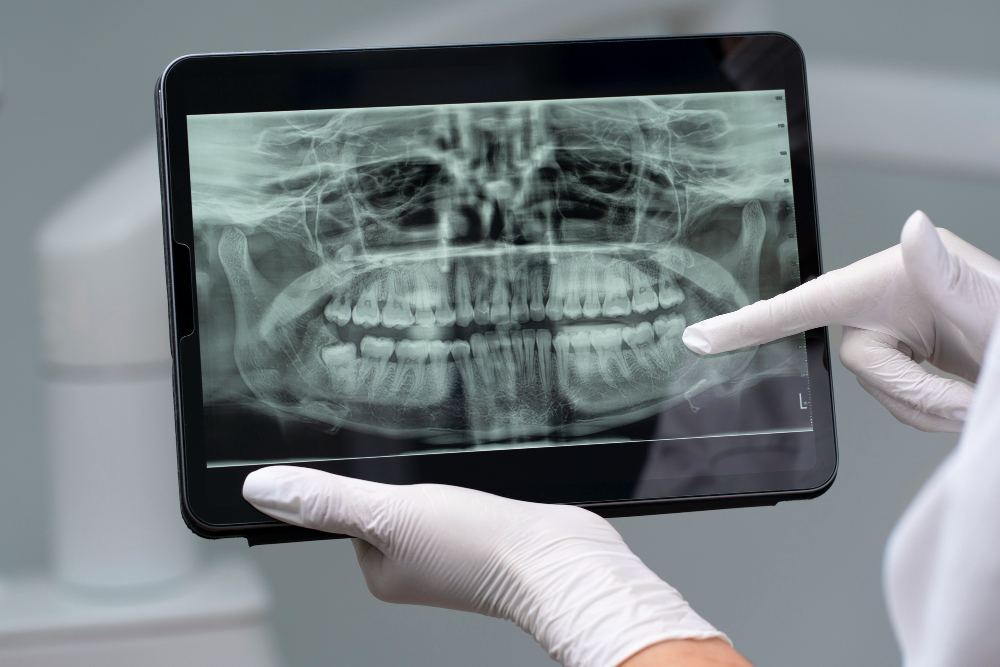
Preventive dentistry helps keep your teeth and gums healthy. It focuses on stopping dental problems before they start. One important tool in preventive dental care is the X-ray. The role of X-rays in preventive dentistry is to spot issues early, often before you feel pain or notice changes. Because of this, X-rays help dentists protect your smile and avoid bigger problems later.
What Are Dental X-rays?
Dental X-rays are special pictures of your teeth and jaw. They use a small amount of radiation to create images. These images show what is happening inside your mouth. For example, X-rays can reveal things that are not visible during a regular dental checkup. As a result, dentists can see hidden problems and plan the best care for you.
Why Are X-rays Important in Preventive Dentistry?
First, X-rays help dentists find dental problems early. Early cavity detection with X-rays means smaller fillings and less pain. In addition, X-rays can show bone loss, infections, or teeth that have not come in yet. Because of this, your dentist can treat issues before they get worse. Preventive dental care with X-rays saves time, money, and discomfort.
Types of Dental X-rays Used for Prevention
There are several types of dental X-rays. Each type helps your dentist see different parts of your mouth. Some common types include:
Because each type has a special use, your dentist will choose the right one for your needs.
How X-rays Help Detect Dental Problems Early
Often, dental problems start small and are hard to see. However, X-rays can spot these issues before you feel pain. For example, X-rays can find tiny cavities, infections, or bone loss. Early detection means your dentist can treat problems quickly. As a result, you avoid bigger treatments like root canals or tooth removal. In short, X-rays are a key part of keeping your mouth healthy.
Safety and Frequency of Dental X-rays
Many people worry about dental X-ray safety. However, modern X-rays use very low radiation. The amount is much less than what you get from natural sources each year. Dentists also use lead aprons and shields for extra protection. According to the American Dental Association and CDC, dental X-rays are safe when used as needed. Your dentist will decide how often you need X-rays based on your age, risk, and dental history. For most people, X-rays are taken once a year or less.
Tips for Patients: Making the Most of Preventive Dental Visits
To get the best care from your dental visits, try these tips:
Because you play an active role, your dentist can help you keep your mouth healthy for life.
In summary, X-rays are a safe and vital part of preventive dentistry. They help dentists find problems early and keep your smile bright. Consult your dentist to learn how X-rays can support your oral health.
